When you buy through link on our site , we may earn an affiliate mission . Here ’s how it works .
The controversial discovery of 68 - million - yr - old diffused tissue paper from the bones of aTyrannosaurus rexfinally has a strong-arm account . accord to novel research , branding iron in the dinosaur ’s body preserved the tissue before it could disintegrate .
The research , headed by Mary Schweitzer , a molecular palaeontologist at North Carolina State University , explains how protein — and possibly even desoxyribonucleic acid — can last millennia . Schweitzer and her workfellow first raised this interrogative sentence in 2005 , when they discover the ostensibly unacceptable : soft tissue paper preserved inside the leg of an adolescentT. rexunearthed in Montana .

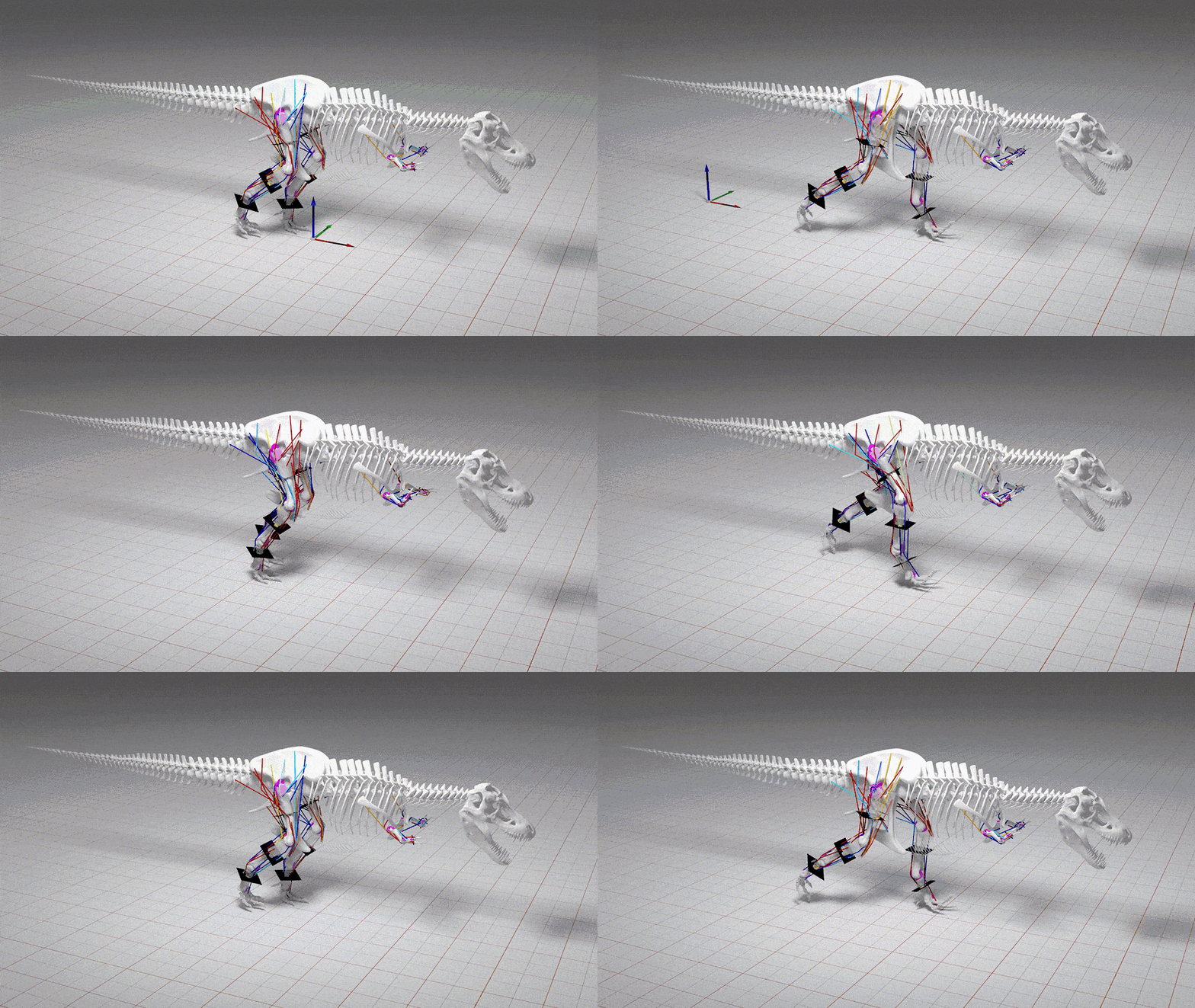
Artwork by Scott Hartman reveals the bone structure of T. rex.
" What we discover was strange , because it was still easy and still transparent and still flexible , " Schweitzer told LiveScience .
T. rextissue ?
The discovery was also controversial , because scientist had thought proteins that make up diffused tissue paper should cheapen in less than 1 million years in the ripe of conditions . In most cases , microbes banquet on a dead animal ’s indulgent tissue paper , destroying it within calendar week . The tissue paper must be something else , perhaps the product of a subsequently bacterial invasion , critics indicate .

Then , in 2007 , Schweitzer and her colleagues analyze the chemistry of theT. rexproteins . They incur the proteinsreally did derive from dinosaur soft tissue . The tissue paper was collagen , they reported in the journal Science , and it shared similarities with bird collagen — which make sense , as forward-looking birds evolve from theropod dinosaur such asT. male monarch .
The researchers also analyzed other fossils for the comportment of soft tissue , and found it was present in about half of their sample going back to theJurassic Period , which endure from 145.5 million to 199.6 million years ago , Schweitzer allege .
" The problem is , for 300 years , we thought , ' Well , the organics are all move , so why should we front for something that ’s not get to be there ? ' and nobody search , " she said .

The obvious question , though , was how sonant , ductile tissue could survive for millions of years . In a unexampled sketch published today ( Nov. 26 ) in the journal Proceedings of the Royal Society B : Biological Sciences , Schweitzer thinks she has the answer : Iron .
Iron lady
Iron is an element present in abundance in the eubstance , particularly in the blood , where it is part of the protein that carries atomic number 8 from the lung to the tissues . Fe is also highly responsive with other molecules , so the soundbox keeps it locked up blotto , take a hop to molecules that prevent it from wreaking havoc on the tissues .

After demise , though , iron is let spare from its coop . It forms minuscule iron nanoparticles and also generates free radicals , which are highly reactive molecules believe to be involved in aging .
" The destitute radicals cause protein and cellular telephone membranes to attach in knots , " Schweitzer said . " They essentially do like formaldehyde . "
Formaldehyde , of course , preserves tissue . It ferment by linking up , or transverse - linking , the aminic pane that make up proteins , which makes those proteins more insubordinate to crumble .

Schweitzer and her colleagues found that dinosaur soft tissue paper is closely associated with smoothing iron nanoparticles in both theT. rexand another soft - tissue specimen fromBrachylophosaurus canadensis , a eccentric of duck’s egg - billed dinosaur . They then test the atomic number 26 - as - preservative idea using modern ostrich lineage vessels . They soak one chemical group of blood watercraft in Fe - productive liquid made of scarlet blood electric cell and another chemical group in water . The blood vessel left in piddle deform into a disgusting mess within days . The blood vessel soaked in red line cadre rest placeable after sitting at elbow room temperature for two years . [ Paleo - Art : Illustrations take dinosaur to Life ]
Searching for soft tissue
Dinosaurs ' smoothing iron - productive blood , combined with a skillful environs for fossilization , may explain the awing existence of soft tissue paper from the Cretaceous ( a menstruum that lasted from about 65.5 million to 145.5 million years ago ) and even originally . The specimen Schweitzer shape with , including skin , show evidence ofexcellent preservation . The bones of these various specimens are articulated , not scattered , suggesting they were immerse speedily . They ’re also buried in sandstone , which is poriferous and may wick away bacteria and reactive enzymes that would otherwise cheapen the bone .

Schweitzer is correct to search for more dinosaur soft tissue paper this summer . " I ’d like to find a honking bigT. rexthat ’s completely articulate that ’s still in the ground , or something alike , " she said . To preserve the interpersonal chemistry of possible gentle tissue paper , the specimens must not be treated with preservatives or glue , as most fossil pearl are , she say . And they involve to be tested quickly , as soft tissue could take down once exposed to New air and humidness .
Importantly , Schweitzer and her colleagues have figured out how to take away the iron from their samples , which enable them to analyze the original proteins . They ’ve even receive chemicals uniform with beingDNA , though Schweitzer is quick to note that she has n’t proven they really are DNA . The iron - slay proficiency should allow paleontologists to search more efficaciously for soft tissue paper , and to test it when they come up it .
" Once we can get the interpersonal chemistry behind some of these soft tissues , there ’s all form of interrogative we can ask of ancient organism , " Schweitzer order .